
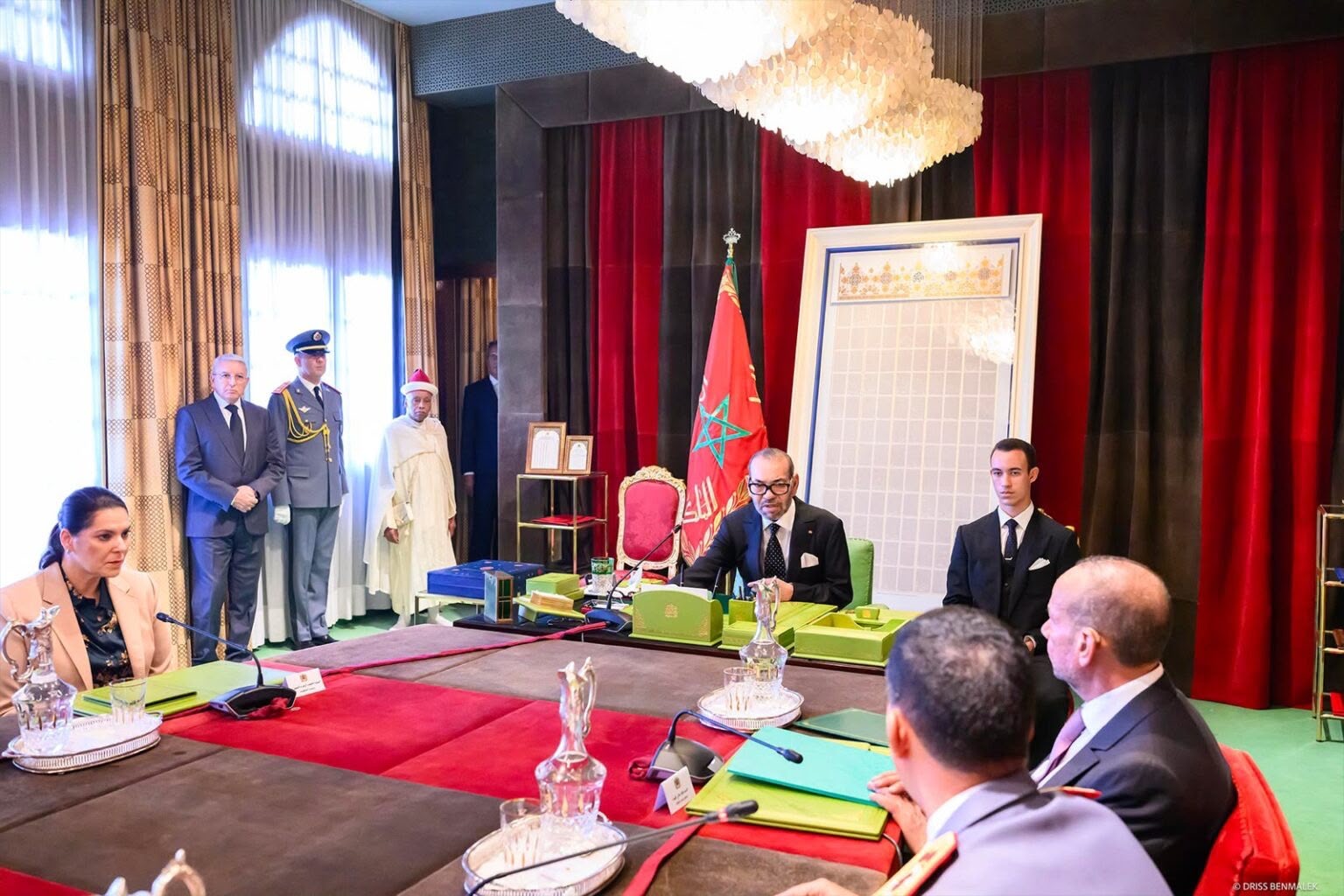
King Mohammed VI unveils Morocco’s Defence Industry Roadmap, targets 50,000 jobs by 2035 with $400m funding
Morocco has unveiled an ambitious roadmap to establish an integrated national defence and security industry, with the Kingdom targeting around 50,000 direct and indirect jobs and local production of approximately 40 per cent of the needs of its armed forces and security agencies by 2035.
The roadmap, presented to King Mohammed VI during a working session at the Royal Palace in Rabat on Wednesday, is designed to move Morocco beyond its existing legal framework for defence manufacturing towards a fully structured industrial ecosystem covering design, production, maintenance, testing and storage.
The strategy, known as the “Morocco Offer,” is backed by an initial 4 billion dirham contribution from the Hassan II Fund for Economic and Social Development, following instructions from the King.
The Royal Office said the initiative seeks to position Morocco among the select group of countries capable of producing defence and security equipment and solutions, while building on the country’s established strengths in aerospace, automotive manufacturing and electronics.
By 2035, the emerging sector is expected to generate more than 65 per cent of its revenue from exports, underlining Rabat’s ambition to develop defence manufacturing not only for domestic requirements but also as an export-oriented industrial sector.
Four-pillar industrial architecture
At the centre of the roadmap is a new institutional architecture designed to coordinate the sector and attract investment.
A dedicated strategic agency will be responsible for implementing the national defence industry strategy and supporting investors, while an industrial holding company will structure defence and security industrial ecosystems, mobilise public and private capital and encourage the emergence of Moroccan industrial champions.
The roadmap also provides for a specialised academy to develop highly qualified professionals and support research and innovation in partnership with industrial operators.
The training framework is expected to draw on both civilian and military expertise within Morocco, as well as skills from the Moroccan diaspora.
The King has instructed officials to move quickly to establish the governance bodies and financing plan, simplify investment procedures and strengthen private-sector participation.
New industrial zones
The territorial dimension of the plan includes two new large-scale defence industrial zones in Benguerir and Benslimane, which will complement two defence industrial acceleration zones already launched in Sidi Yahya and Nouaceur.
The new sites are expected to expand Morocco’s industrial footprint while creating additional centres for employment, technical expertise and investment.
The Royal Office said investors have already shown interest in establishing projects in the Kingdom, including projects aimed at export markets.
Focus on future technologies
The roadmap places particular emphasis on advanced and dual-use technologies.
Priority areas include drones and autonomous systems, land and naval platforms, defence electronics, cyber defence and artificial intelligence.
Morocco intends to build on capabilities developed through its aerospace, automotive and electronics sectors, using existing industrial expertise and international partnerships to strengthen technology transfer and integration into global value chains.
The strategy therefore goes beyond conventional military manufacturing. It is designed to create an industrial base capable of supporting research, innovation, specialised manufacturing and maintenance while generating wider technological and economic benefits.
An African model?
Morocco’s approach could also offer a reference point for other African countries seeking to develop strategic industries and reduce dependence on imported equipment.
Rather than focusing solely on procurement, the roadmap combines dedicated governance, public financing, private-sector participation, specialised skills development and industrial zones into one national framework.
That architecture is particularly relevant across Africa, where several countries are looking for ways to convert growing defence expenditure into local manufacturing capacity, employment and technological development.
Morocco’s experience could consequently become an example of how an African country can use its existing industrial strengths to gradually build a domestic defence and security manufacturing ecosystem.
The Kingdom has also positioned the initiative within its wider South-South cooperation and international partnership strategy.
Ambitious 2035 targets
The figures attached to the roadmap underline the scale of Morocco’s ambition.
By 2035, the country expects the defence and security industry to:
• Create around 50,000 direct and indirect jobs;
• Meet approximately 40 per cent of the requirements of the Royal Armed Forces and security agencies through domestic production;
• Generate more than 65 per cent of sector revenue from exports.
The targets reflect a strategy aimed at combining strategic autonomy with industrial growth and international competitiveness.
King Mohammed VI has consequently directed that implementation begin rapidly, with the establishment of the governance structures and financing arrangements treated as immediate priorities.
The 4 billion dirham contribution from the Hassan II Fund provides the initial public financial backing for the roadmap, while the wider strategy seeks to mobilise domestic and international private capital.
For Morocco, the objective is clear: transform an emerging defence manufacturing base into a structured, technology-driven industry capable of supplying national requirements, creating jobs and competing in international markets.


