
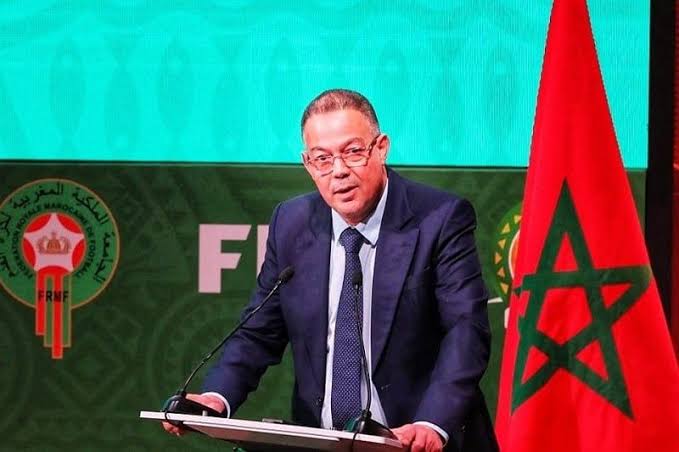
Morocco Poll: Football chief Lekjaa emerges as key political figure
Morocco goes to the polls on Wednesday to elect a new parliament, with Fouzi Lekjaa, the president of the Royal Moroccan Football Federation (FRMF), emerging as one of the prominent figures attracting attention during the legislative election.
Nearly 15.8 million registered voters are eligible to elect the 395 members of Morocco’s House of Representatives, with jobs, living costs, wages, healthcare and inequality among the major issues dominating the campaign.
Lekjaa, 56, brings a high-profile football administration background to the political contest. He has served as president of the Moroccan football federation since 2014 and is also Morocco’s minister delegate for the budget. CAF currently lists him as president of the Moroccan federation and first vice-president of the Confederation of African Football.
His entry into partisan politics came in July 2026, when he joined the Authenticity and Modernity Party (PAM) and took a position on its political bureau ahead of the parliamentary election.
Lekjaa’s political profile has attracted particular attention because of his long association with the development of Moroccan football and the country’s preparations for major international competitions.
He is also chairman of the organising committee for the 2030 FIFA World Cup, which Morocco will co-host with Spain and Portugal. The tournament has placed major infrastructure projects, including stadiums and transport facilities, at the centre of the country’s development agenda.
During the campaign, Lekjaa has participated in PAM activities and engaged voters on issues including purchasing power and living standards.
“We want to make young people a force capable of bringing added value rather than being left behind,” Lekjaa said during the campaign.
The football administrator has also spoken about the rising cost of living, with reports quoting him as saying that PAM wants to use legal means to restore living standards to previous levels.
Lekjaa’s emergence in politics comes at a significant moment for Morocco, with the next government expected to oversee the final phase of preparations for the 2030 World Cup while also responding to economic and social pressures.
Reuters reports that Morocco is investing heavily in stadiums, railways and other infrastructure ahead of the tournament, with planned spending estimated at about 190 billion dirhams, or $20 billion.
The election campaign has also been shaped by concerns over unemployment, particularly among young people, as well as demands for improvements in education, healthcare, housing and public services.
Lekjaa’s football background has consequently become an important part of his public profile as he takes on a more visible political role. His experience in sports administration, public finance and World Cup planning places him at the intersection of two major areas of Morocco’s current national agenda.
The election will determine the composition of the 395-seat House of Representatives. Under Morocco’s constitutional system, the King appoints the head of government from the party that wins the largest share of seats, after which the prime minister forms a government.
For Lekjaa, the vote represents a new chapter beyond football administration, following more than a decade at the helm of Moroccan football and his increasingly prominent role in the country’s preparations for the 2030 World Cup.
Moroccans began voting at 8am on Wednesday, with polling scheduled to close at 7pm and preliminary results expected after voting ends.


