
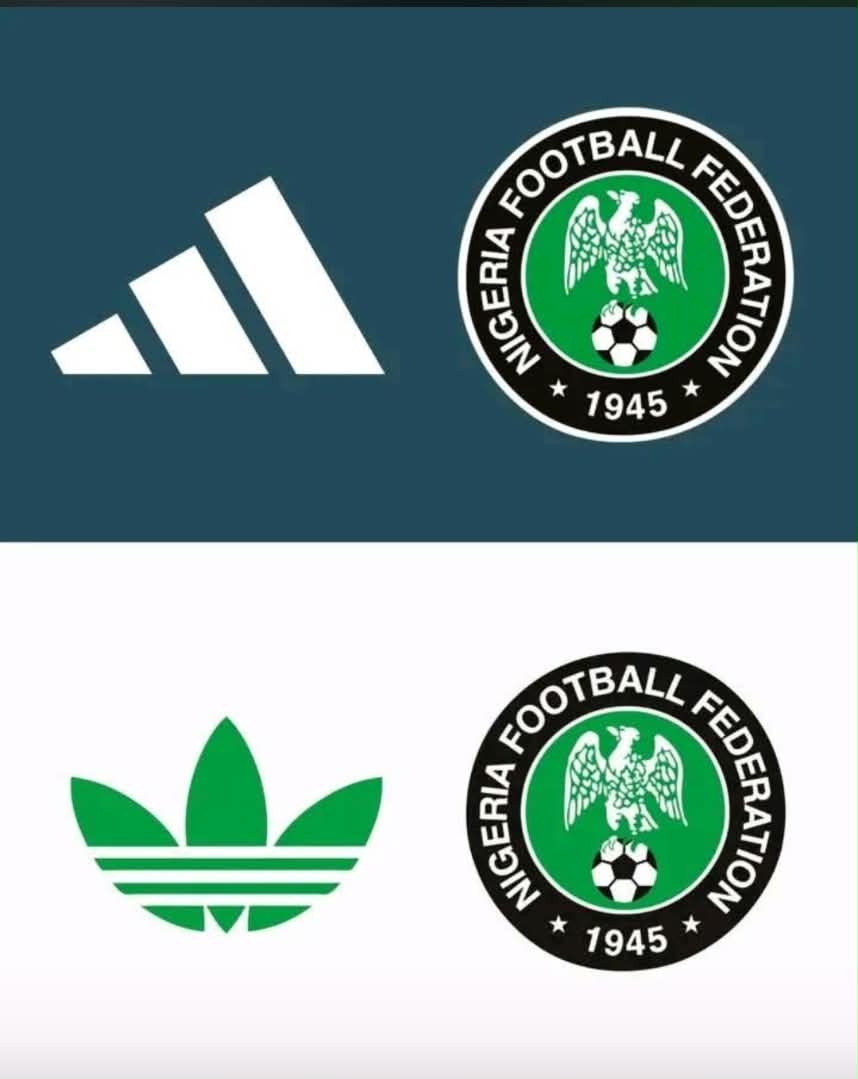
This is more than a kit deal: Nigeria is finally learning to monetise its football brand
By ‘Sola Fanawopo
There are moments in football administration when you pause, smile and simply say: this is what we have been talking about.
The reported new partnership between the Nigeria Football Federation and Adidas is one of those moments.
According to the details shared with us, the agreement is valued at approximately $8.5 million, comprising $4 million in kits and $4.5 million in cash. If the reported figures are confirmed in the final agreement, this would represent a landmark commercial deal for Nigerian football and, reportedly, the biggest football kit partnership of its kind in Africa.
But for me, the most exciting part is not simply the headline figure. It is what sits underneath it.
WE MUST STOP THINKING OF JERSEYS AS JUST JERSEYS
For too long, football in Nigeria has been viewed primarily through the narrow lens of competitions, government subventions and sponsorship cheques. That model is no longer sustainable.
Football is a business. The national team is a global entertainment property. The Super Eagles jersey is a consumer product, and Nigerian football supporters are a market. If we are serious about building a football economy, we must learn to monetise every part of that ecosystem.
That is why I was particularly excited to hear that Adidas intends to expand its physical retail presence in Nigeria, reportedly from about 13 stores to 30, while also working with leading sports retailers across the country.
This could be transformational. Imagine being able to walk into a sports shop in Lagos, Osogbo, Ibadan, Benin, Kano, Enugu, Port Harcourt or Abuja and find authentic Super Eagles jerseys and Nigerian national-team merchandise. That is how you build a football culture, fight counterfeit merchandise, create jobs and turn the emotional connection Nigerians have with the Super Eagles into a sustainable commercial ecosystem.
THE PART THAT REALLY EXCITES ME AS A STATE FA CHAIRMAN
However, there is one aspect of this agreement that particularly caught my attention.
The NFF has indicated that 20% of sales generated under the arrangement will be allocated to football development, with 10% going to the NFF and 10% to its affiliates for grassroots development.
For those of us working directly at State Football Association level, this is huge.
Very often, when we talk about commercialisation, people imagine that the money stops at the top. That should not be the Nigerian model. Football must have a value chain.
If a child in Igbajo buys a Super Eagles jersey, if a supporter in Osogbo buys a national-team shirt, or if a football fan in Enugu purchases official Nigerian merchandise, there should be a pathway through which a portion of that economic activity ultimately supports the development of the game.
The national team should not only represent the grassroots; the success of the national team should also help finance the grassroots.
That is the circle we must build.
IMAGINE WHAT 10% TO THE AFFILIATES CAN DO
As someone involved directly in grassroots football administration, I know what even relatively modest additional funding can mean. A State FA can use predictable commercial revenue to support youth competitions, improve coaching education, strengthen women's football, support refereeing development, establish better player-registration systems, help clubs with competition costs and invest in scouting and talent identification.
Most importantly, it can plan.
Football development cannot depend entirely on emergency fundraising. We need predictable revenue and sustainable funding structures that allow State FAs to think beyond the next competition. If this Adidas arrangement delivers what has been communicated, it could become an important part of that architecture.
THEN THERE IS THE 'HOMEGROUND' OPPORTUNITY
Another element of the agreement that I find particularly remarkable is the reported strategic partnership that could give Nigerian national teams access to Adidas' HomeGround training facility in Germany.
Think about what that means. Our national teams could potentially have access to a world-class football environment associated with one of the biggest sports brands on the planet, with opportunities around training facilities, technology, sports science, high-performance infrastructure, international exposure and knowledge exchange.
These are not small things.
When we talk about improving Nigerian football, we sometimes focus exclusively on the quality of our players. But modern football is an ecosystem. The best players need the best preparation; coaches need access to knowledge; performance analysts need technology; medical teams need modern systems; and administrators need strategic partnerships.
A relationship with a global sports company should therefore go beyond supplying jerseys. It should transfer knowledge, technology, infrastructure and commercial expertise into the Nigerian football ecosystem.
That is where the real long-term value lies.
THIS IS WHY I WANT TO GIVE GUSAU AND SANUSI THEIR FLOWERS
I have been critical of football administration when I believe things are not being done properly. I have also learned that if we demand accountability when things go wrong, we must be prepared to acknowledge achievement when things go right.
So, on this occasion, I want to give credit where credit is due.
Malam Ibrahim Gusau, immidiate past President of the NFF, and Dr Mohammed Sanusi, the immidiate past NFF General Secretary, deserve their flowers for getting this agreement to this point.
Commercial negotiations of this magnitude do not happen by accident. They require persistence, negotiation, positioning and an understanding of the value of the Nigerian football brand.
But this is not the time for celebration alone. It is the time for implementation.
THE REAL TEST STARTS NOW
A record-breaking agreement is only as good as what it produces.
We must insist on transparency around the commercial structure, track merchandise sales and the revenue reaching affiliates, and establish clear development criteria for the funds. We should be able to answer simple questions: How many coaches were trained? How many grassroots competitions were supported? How many young players were scouted? How many women's teams benefited? How many State FAs received funding? How many new retail outlets became operational?
These are the numbers that will ultimately tell the story.
NIGERIA MUST THINK BIGGER
This agreement should also force us to rethink how we approach football sponsorship generally.
We should not be approaching companies simply to ask them to put their logos on our shirts. We should be asking what each partnership can do for Nigerian football.
Can a telecommunications company build digital football infrastructure? Can a bank finance youth competitions? Can a technology company develop player-performance systems? Can a transport company support away-game logistics? Can a media company build a football entertainment platform? Can a sportswear company develop grassroots retail and coaching programmes?
That is the football economy we should be building.
And Nigeria has the market for it. We have millions of passionate football supporters, one of Africa's strongest football brands, globally recognised players, the Super Eagles, the Super Falcons and young footballers everywhere.
What we have lacked is the ability to systematically convert that passion into sustainable economic value.
Perhaps this Adidas agreement is a sign that we are beginning to learn.
FROM THE SUPER EAGLES TO THE LAST CHILD ON THE PITCH
Ultimately, this cannot just be about Adidas. It cannot just be about the NFF or the Super Eagles. The real question is whether the commercial success of Nigerian football can finally travel from the national team down to the smallest football pitch in the country.
That is the test.
Because somewhere in Osun today, there is a young boy dreaming of becoming the next Victor Osimhen. Somewhere in Edo, there is a girl dreaming of becoming the next Asisat Oshoala. Somewhere in Kano, Enugu, Kaduna, Rivers or Ondo, there are children playing football with extraordinary talent but very limited opportunities.
The ultimate measure of this deal should be whether those children feel its impact.
That is why I am excited.
Not simply because Nigeria has negotiated a big Adidas deal, but because, if properly implemented, this could represent something bigger: a shift from football as expenditure to football as an economic ecosystem.
From jerseys to merchandising. From merchandising to revenue. From revenue to grassroots development. From grassroots development to talent. From talent to stronger national teams. And from stronger national teams to an even more valuable Nigerian football brand.
That is the cycle we must build.
The giants may not need to make noise. But when giants understand the value of what they possess, they should know how to turn that value into power.
Nigeria is a football giant.
Now, let us build the football economy worthy of that status.
'Sola Fanawopo is the Chairman, Osun State Football Association. He writes from Osogbo.


