
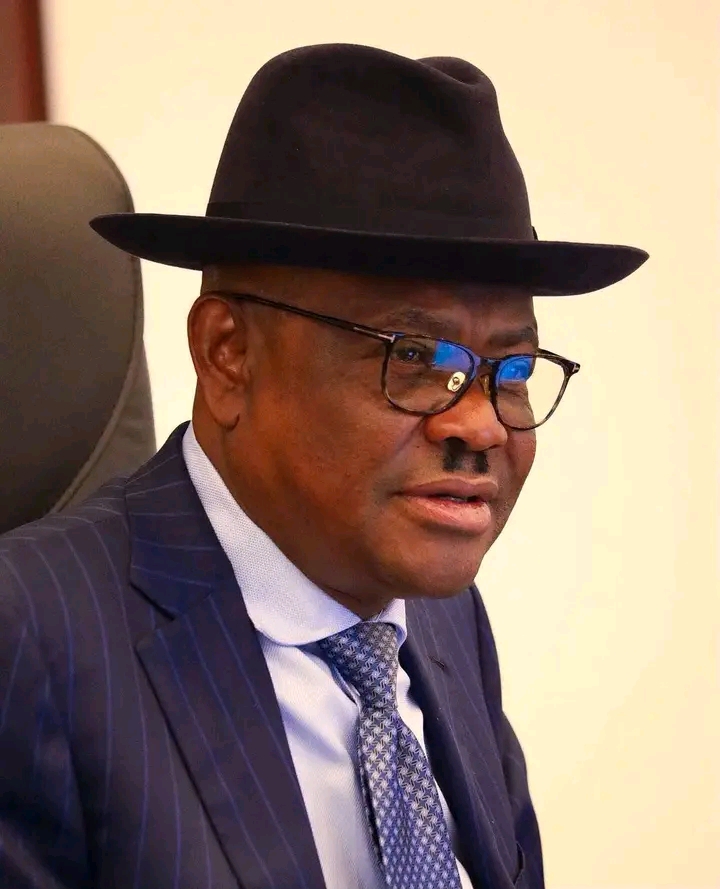
CAF Safety chief appeals to Wike to extend Abuja's transformation to sports infrastructure
The Head of Safety and Security of the Confederation of African Football (CAF), Dr. Christian Emeruwa, has appealed to the Minister of the Federal Capital Territory (FCT), His Excellency Nyesom Wike, CON, to extend the ongoing infrastructure transformation in Abuja to the capital city’s sporting facilities.
Emeruwa, who lived in Abuja for several years while working with the Nigeria Football Federation (NFF), made the appeal following a recent visit to the nation’s capital.
Now based in Cairo, Egypt, where he serves as a CAF official, Emeruwa said he was struck by the scale of infrastructural development taking place across Abuja, particularly the transformation of the city’s road network.
However, his visit to the Moshood Abiola National Stadium and the Old Parade Ground left him concerned about the state of the capital’s sporting infrastructure.
In a strongly worded but respectful public appeal to the FCT Minister, Emeruwa said Abuja’s sporting facilities should not be left behind as the city undergoes major physical transformation.
Reflecting on his recent visit, Emeruwa said the changes to Abuja’s road network were so significant that even someone who once knew the city intimately could easily lose his bearings.
“I visited Abuja a few days ago and almost lost my way, not because I was driving, but because the road network of the city has changed so significantly that, if you are not careful, you may actually miss your way,” he said.
He recalled how a friend picked him up from the Transcorp Hilton and drove him to see his doctor, using roads and connections he could barely recognise.
Emeruwa said his familiarity with Abuja dates back many years. He built his home in the city and lived there from 2007 until January 2019, before leaving for CAF in February of that year.
“But as I write this, I am not sure I can still claim to know Abuja,” he said.
According to him, the transformation of Abuja’s infrastructure under Wike has been remarkable.
“I saw new and improved roads, flyovers and other infrastructure across the city. I also saw the fountains around the City Gate, with families enjoying the environment. Abuja is visibly changing.”
After admiring the transformation taking place across the city, Emeruwa decided to visit what he described as his “constituency” — Abuja’s sporting infrastructure.
His destination was the Moshood Abiola National Stadium.
But the experience, he said, was strikingly different from what he had witnessed elsewhere in the capital.
“As I entered through the stadium gate, it felt as though I had suddenly left the Abuja I had just been admiring,” he recalled.
Emeruwa described the stadium as one of Nigeria’s great national sporting monuments, but expressed concern that it appeared to be “living in the shadow of its past glory” while a rapidly changing Abuja developed around it.
That contrast, he said, prompted him to ask whether the FCT Minister had been made sufficiently aware of the condition of the city’s major sporting facilities.
Emeruwa noted that Wike’s record in Rivers State, including investments in sports infrastructure and the establishment of the Real Madrid Academy, demonstrated that the minister understands the importance of sports development.
“I cannot believe that sport has no place in his vision for a renewed Federal Capital Territory,” he said.
He suggested that the sports community might simply not have made its case strongly enough.
Consequently, Emeruwa has chosen to make his appeal publicly.
“Your Excellency, please extend the Abuja renewal to our sporting infrastructure,” he appealed.
He specifically urged the minister to take a fresh look at the Moshood Abiola National Stadium and the Old Parade Ground, with a view to integrating both facilities into the wider transformation taking place across the FCT.
For Emeruwa, investment in sporting infrastructure goes beyond the provision of facilities for athletes.
He argued that roads and bridges connect communities physically, while sports connect people socially and emotionally.
“Sporting facilities provide spaces for our young people, create economic activity, promote healthy living, support national teams and give a city places where its citizens can gather around a common identity,” he said.
He also painted a picture of what Abuja could become if its sporting facilities received the same attention as its roads and other public infrastructure.
“Imagine a fully revitalised National Stadium standing proudly alongside the new roads, bridges and public infrastructure now defining Abuja,” he said.
“Imagine the Old Parade Ground transformed into a modern, safe and vibrant community sporting facility in the heart of the capital.”
According to him, these facilities should not remain in the shadow of Abuja’s transformation but should become an integral part of it.
Emeruwa acknowledged the infrastructure achievements of the FCT administration and urged Wike to apply the same political will and determination to sports.
“Your Excellency, you have demonstrated what is possible when there is political will and a determination to deliver infrastructure,” he said.
“Please remember sport in the Abuja renewal agenda.”
He concluded by stressing that the benefits would extend beyond the sporting community to young people, residents and the wider identity of Nigeria’s capital.
“The sporting community will be grateful, the young people of Abuja will benefit, and Nigeria’s capital city will be better for it.
“Abuja is changing. Let our sporting infrastructure change with it.”
Join the Savid News channel on WhatsApp:


