
NFF Reform: FIFA, CAF begin waiting game after Abuja stakeholders’ talks
The conclusion of the FIFA and Confederation of African Football (CAF) assessment mission in Nigeria has heightened expectations over the next phase of the country’s football reforms, with stakeholders now awaiting a formal position from the two governing bodies.
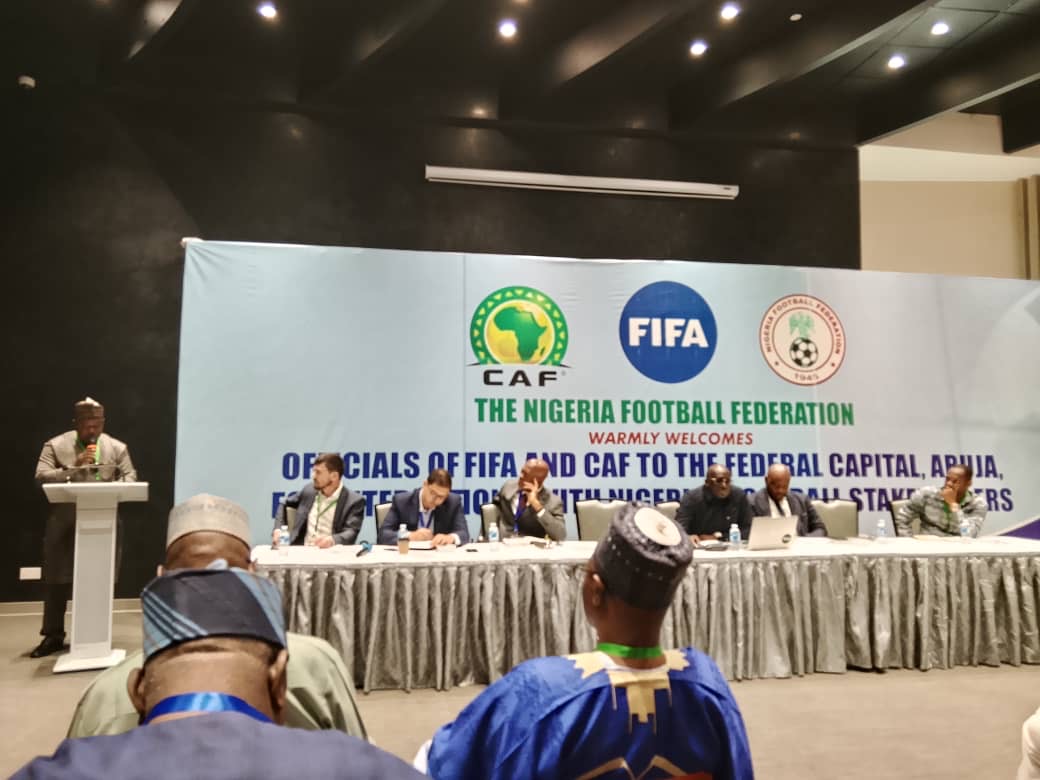
The four-man delegation, comprising FIFA officials Ahmed Harraz, Rolf Tanner and El Hadj Wack Diop, alongside CAF Legal Manager Nnaemeka Olu, spent two days in Abuja consulting widely on the legal, administrative, governance and electoral issues surrounding the crisis in the Nigeria Football Federation (NFF).
The mission followed the August 27 resignation of NFF President Ibrahim Gusau, General Secretary Mohammed Sanusi and members of the Executive Committee, which triggered the suspension of the federation’s electoral process and prompted calls for a comprehensive restructuring of Nigerian football.
FIFA had earlier made clear that the visit was a fact-finding and consultation exercise. The governing body said the assessment would help it and CAF understand the circumstances surrounding the leadership changes, hear the views of stakeholders and determine whether recommendations should subsequently be submitted to their competent decision-making bodies.
The delegation met a broad spectrum of Nigerian football stakeholders, including the National Sports Commission (NSC), NFF administration and secretariat, electoral bodies, State Football Associations, leagues, players, coaches, referees, clubs, former federation officials, sponsors, supporters and the sports media.
Among those who presented their views were former NFF presidents and secretaries-general, club owners, former internationals, players’ representatives and members of the Sports Writers Association of Nigeria (SWAN), including National President Isaiah Benjamin, Secretary-General Ikenna Okonkwo and Deputy Secretary-General Samuel Ahmadu.
The breadth of the consultations has raised expectations that the eventual reform process could go beyond simply replacing the officials who resigned. Issues around the NFF statutes, Congress composition, electoral structures, representation and the relationship between the federation and its various stakeholders are all part of the wider governance discussion.
One of the issues attracting considerable attention is the possibility of a Normalisation Committee. While the option has featured prominently in discussions surrounding the crisis, there was no official confirmation from FIFA or CAF, as of the conclusion of the mission, that such a committee had been approved.
The National Sports Commission has said it remains committed to dialogue with FIFA, CAF, NFF members and other stakeholders on comprehensive reforms aimed at resetting the football ecosystem. The NSC also said the outcome of the consultations would be taken back to FIFA’s leadership for consideration.
The current interim administration of the NFF Secretariat, headed by Acting General Secretary Dr Emmanuel Ikpeme, has also become part of the uncertainty surrounding the next stage. The status and duration of the interim arrangement will ultimately depend on decisions taken within the applicable football governance framework.
Beyond the immediate leadership question, stakeholders have continued to call for a more representative football governance structure. Proposals have included reviewing the composition of Congress and ensuring that important constituencies across Nigerian football have meaningful participation in the governance process, subject to the relevant statutes and regulations.
The challenge now is to translate the extensive consultations into a credible and workable reform roadmap. FIFA and CAF’s next decision will be particularly important because the electoral process remains suspended while the assessment and subsequent consideration of the findings continue.
For Nigerian football, the waiting period therefore carries significant importance. Whether the eventual solution involves existing structures, a transitional arrangement or another mechanism permitted under FIFA, CAF and NFF regulations, the immediate focus remains on restoring a functioning governance system while addressing the structural issues that have contributed to repeated crises.
The expectation among stakeholders is that the next phase will provide clarity on the leadership transition, electoral timetable, representation and broader reform agenda. Until FIFA and CAF formally communicate their position, however, the precise structure and roadmap remain open.


