
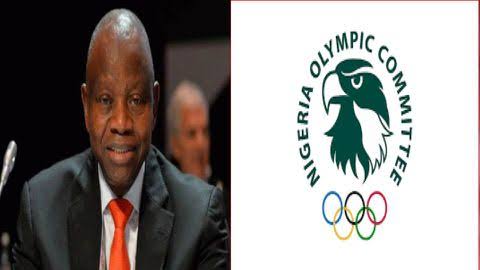
Sports Governance: NOC, IOC set Abuja Seminar for Federation Presidents
The Nigeria Olympic Committee (NOC) is set to bring together presidents of National Sports Federations in Abuja for a two-day Good Governance Seminar aimed at strengthening accountability, transparency, leadership and institutional effectiveness across Nigeria’s sports administration.
The capacity-building programme, supported by the International Olympic Committee (IOC) through its Olympic Solidarity programme, is scheduled for September 28 and 29, 2026, at the Starview Palace Hotel, 4th Avenue by Setraco, Gwarinpa, Abuja.
The initiative is designed to equip federation presidents with practical knowledge and leadership skills needed to manage sports organisations in accordance with internationally recognised governance standards.
The programme will focus on a broad range of issues, including sports architecture, leadership principles and qualities, core governance principles, responses to governance challenges, the roles and responsibilities of presidents and secretary-generals, effective management of National Sports Federations, as well as identifying forms and areas of corruption in sports.
The NOC said the seminar aligns with the Basic Universal Principles of Good Governance within the Olympic Movement, which emphasise clear vision and strategy, sound organisational structures and regulations, integrity, ethics, transparency, accountability and effective control mechanisms.
According to the Committee, good governance is fundamental to the credibility, sustainability and growth of sports organisations, particularly federations entrusted with implementing development programmes, organising competitions and representing Nigeria in international sporting structures.
NOC Secretary-General, Babatunde Popoola, said the seminar would provide federation presidents with an opportunity to exchange experiences, examine governance challenges confronting Nigerian sports and develop practical approaches to improving administration and service delivery.
Popoola added that continuous engagement among sports administrators was important in strengthening institutional structures and ensuring that federations are better equipped to respond to administrative, financial and regulatory demands.
The seminar is also expected to provide a platform for federation leaders to examine existing practices and discuss how clearer responsibilities, stronger internal structures and improved accountability mechanisms can enhance the effectiveness of sports administration in the country.
To ensure effective delivery of the programme, the IOC has appointed Dr Donald Rukare, President of Commonwealth Sport and a MEMOS instructor in Governance and Sports Management, as the international expert and facilitator.
Rukare’s participation is expected to bring an international perspective to discussions on leadership, institutional management and governance standards within the Olympic Movement, while providing participants an opportunity to examine approaches that could be adapted to the Nigerian sports environment.
NOC President, Engr Habu Ahmed Gumel, reaffirmed the Committee’s commitment to continuous education, workshops and training as part of efforts to strengthen the capacity of sports administrators and contribute to the development of Nigerian sports.
Gumel’s position reflects the NOC’s broader emphasis on capacity building as an important component of sports development, alongside athlete preparation, technical development and competition organisation.
The Chairman of the National Sports Commission, Mallam Shehu Dikko, is expected to officially declare the Abuja session open.
The NOC has stressed that National Sports Federations, as its affiliates, are expected to operate in accordance with their respective constitutions, applicable regulations and recognised ethical standards.
The seminar therefore comes as an opportunity for federation presidents to strengthen their understanding of the responsibilities attached to their positions while developing practical responses to some of the governance challenges confronting sports organisations.
For the NOC, strengthening governance structures at federation level remains central to building sports institutions that can operate with greater transparency, accountability and professionalism and deliver sustainable programmes for athletes and other stakeholders.
The two-day Abuja seminar is consequently expected to combine expert presentations, experience-sharing and practical discussions as federation presidents examine ways of improving leadership and administration across Nigerian sports.


