
Abuja, Lagos National Stadia Get Major Facelift in FG Sports Revamp
The Federal Government, through the National Sports Commission, has approved a wide-ranging sports infrastructure renewal programme aimed at repositioning Nigeria’s sporting facilities to international standards and driving youth development through sports.
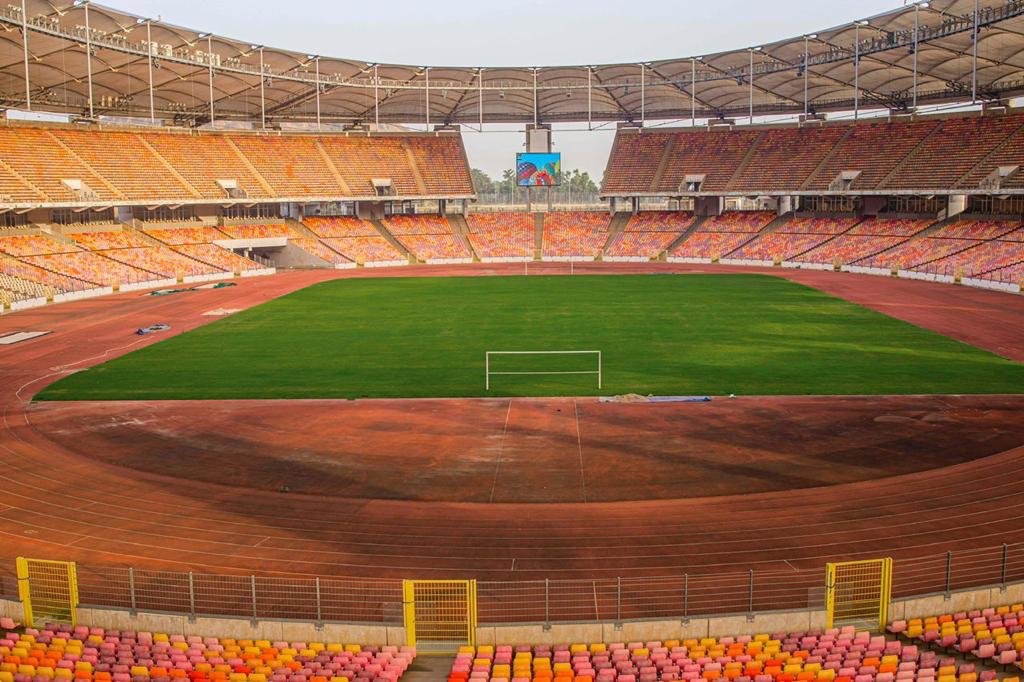
A major highlight of the approvals is the comprehensive redevelopment of the pitch and athletics tracks at Moshood Abiola National Stadium, which has struggled with poor playing conditions in recent years. Critical facilities including dressing rooms, the media centre, VIP areas, corporate suites, public address systems, security installations, roof membrane and cooling systems will also undergo major upgrades.
The Abuja stadium complex will additionally benefit from the establishment of a High Performance Centre, rehabilitation of the Package B swimming pool, construction of two new training pitches and the completion of a 200-bed athletes’ hostel into a full hotel complex designed to serve athletes and generate sustainable revenue.
The Federal Government also approved the construction of an anti-doping laboratory, upgrades to sports medical facilities with advanced equipment and the development of a new National Sports Centre that will provide office accommodation for the Commission and various sports federations.
Chairman of the Commission, Shehu Dikko, described the projects as part of a broader national sports revival strategy under President Bola Ahmed Tinubu, adding that a National Sports Infrastructure Development Bond has also been approved to ensure long-term funding for sports facility development and maintenance nationwide.
Director-General of the Commission, Bukola Olopade, said the initiative goes beyond infrastructure renewal and is designed to create a complete sports ecosystem capable of supporting talent development, employment opportunities and international competitiveness.
The Abuja stadium will further receive upgraded floodlights, electronic advertising boards, pitch protection systems for concerts and events, as well as the installation of Video Assistant Referee technology to improve Nigeria’s readiness to host major international competitions.
In preparation for future multi-sport events, the Federal Government also approved direct intervention for states hosting upcoming editions of the National Sports Festival. Enugu State, host of the next festival, will benefit from the construction of an Olympic-size swimming pool, rehabilitation of athletes’ hostels and upgrades to its indoor sports hall and other sporting facilities.
The Commission equally approved the establishment of sports centres in 15 tertiary institutions across Nigeria and the construction of 20 mini sports centres and mini stadiums in communities nationwide to strengthen grassroots sports development, youth engagement and security through sporting activities.
Beyond Abuja and Enugu, ongoing infrastructure projects include the redevelopment of National Stadium Lagos, the revamp of Obafemi Awolowo Stadium in partnership with the Oyo State Government, reconstruction work at Ahmadu Bello Stadium in collaboration with the Kaduna State Government, and continued work on the new Bichi Stadium through a partnership involving the National Assembly.


