
Africa's Athletics Dilemma: Talent without a stage
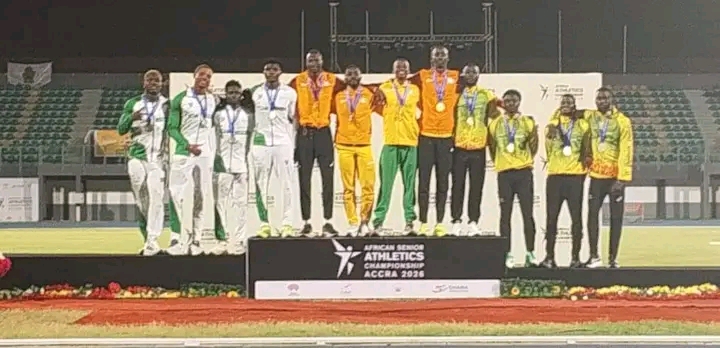
The 24th edition of the CAA Senior Athletics Championships in Accra may have concluded, but the reverberations from Ghana’s capital continue to echo across the continent. Beyond the medals, national pride, and record-breaking performances lies a pressing question: how can African athletics transform its vast talent into a truly continental spectacle?
The championships revealed a stark contradiction: Africa produces some of the world’s greatest athletes, yet struggles to assemble those stars on its own biggest stage.
Bawah Fuseini, President of the Ghana Athletics Association, confronted the issue candidly. He explained how Ghana worked tirelessly to secure sponsorship for the event, despite the absence of many elite African athletes.
“We used some of our domestic athletes to secure local sponsorship, and some African athletes to attract regional support,” Fuseini said. “Unfortunately, we were not able to attract enough of the top African athletes. Had we been able to incentivize their participation, we could have leveraged their presence to attract international sponsorship.”
His words cut to the heart of the problem: sponsorship follows visibility, and visibility follows star power. Without Africa’s elite athletes on the continent’s biggest stage, the championships risk losing commercial relevance in a fiercely competitive global sports market.
Fuseini pointed to football as a model for athletics.
“Look at the Africa Cup of Nations. Almost every country brings its best footballers, which is why CAF consistently attracts sponsorship. If we can’t do that in athletics, we can’t expect sponsorship.”
Indeed, the Africa Cup of Nations has become a continental phenomenon because nations treat it with prestige, stars participate without hesitation, broadcasters invest heavily, and sponsors compete for visibility. Athletics, despite Africa’s dominance on the global stage, has yet to build a similar continental identity around its flagship championship.
“Africa has the best athletes in the world, yet they do not compete in our top African event. That’s something the CAA must address,” Fuseini said, issuing a clear challenge.
The solution, he argued, lies in structural reform. The future of African athletics cannot depend solely on the goodwill and sacrifices of host nations. The CAA needs a strong, enforceable framework that protects the integrity of its elite competition—mandatory elite participation, better calendar alignment with global events, appearance incentives, stronger commercial packaging, and long-term sponsorship structures.
Fuseini also highlighted the cyclical nature of challenges: limited funding restricts organizational capacity, which in turn makes it harder to attract top athletes and premium sponsors.
“The African problem is funding,” he said. “States often fund events only if they fall within specific periods. That’s why we moved the championships from July to May, even though it meant some student-athletes based in the US couldn’t attend.”
This balancing act—between government financing cycles, international schedules, and logistical realities—is a recurring challenge for African hosts. Ghana itself faced competitive gaps due to the absence of key athletes abroad, but organizers prioritized securing government backing over perfect participation.
Despite these obstacles, Ghana delivered the championships. The event showcased Africa’s resilience, sacrifice, and determination, often in the face of limited financial resources. Yet Fuseini emphasized that resilience alone cannot sustain elite sport.
For African athletics to truly evolve, governments must see sports as an economic and diplomatic investment, corporate Africa must recognize its commercial potential, and the CAA must elevate its championships into an event every elite athlete aims to attend.
“We will continue to advocate for more funding,” Fuseini said. “If we had our own resources, we wouldn’t have had to rely on third-party agencies for tickets. With Ghana’s new sports fund, I hope next year will be different.”
The message from Accra is unmistakable: Africa has the talent, the passion, and the potential—but without structure, commitment, and continental resolve, its athletics championship will never match the greatness of its athletes.
By Maxwell Kumoye, reporting from Accra for the CAA Senior Athletics Championships
21/05/2026
Join the Savid News channel on WhatsApp:


