
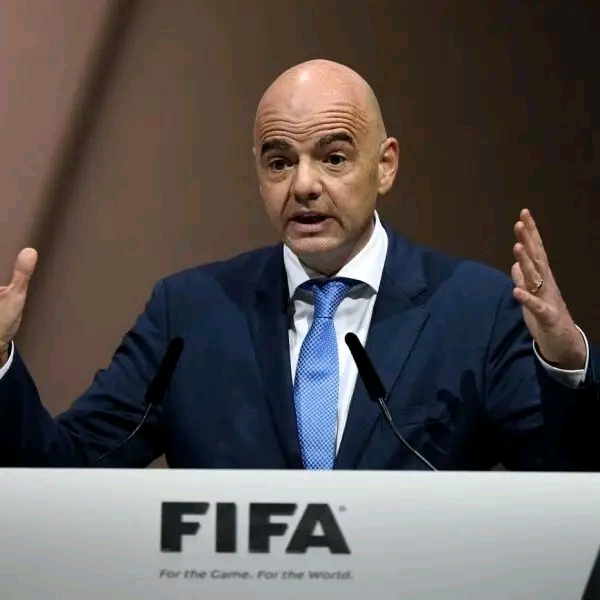
FIFA raises alarm over alleged Presidency pressure on Gusau
FIFA on Tuesday raised serious concerns over alleged government interference in the affairs of the Nigeria Football Federation (NFF), following reports that NFF President Ibrahim Musa Gusau resigned from office after receiving a directive from the Presidency.
In a strongly worded communication dated September 1, 2026 and referenced NIG-GOV-INT-2026, FIFA called for urgent clarification from the Nigerian authorities, warning that any government action resulting in the removal of an elected football official could constitute a breach of FIFA’s statutes.
The letter, addressed to the NFF President and the Chairman of the National Sports Commission (NSC), invoked Articles 14 and 19 of the FIFA Statutes, which require member associations to manage their affairs independently and without undue influence from third parties, including government authorities.
FIFA specifically expressed concern over reports that Gusau’s resignation was linked to a directive from the Presidency, stressing that the autonomy of national football associations remains a fundamental principle of the global football governing body.
The latest development comes days after the leadership of the National Sports Commission was reportedly in Zurich for discussions with FIFA, with the visit said to have been aimed at exploring the possibility of establishing a normalisation mechanism for Nigerian football following Gusau’s widely broadcast resignation.
That reported visit has now assumed greater significance following FIFA’s latest communication, particularly its warning that any transition in the NFF must comply with the statutes governing the autonomy of national football associations.
According to the letter, FIFA is demanding written confirmation within seven days that Gusau’s resignation was voluntary and made without external pressure.
The world football governing body also requested an official clarification from the Federal Government on the circumstances surrounding the development, as well as assurances that the NFF would continue to conduct its affairs in accordance with its statutes and applicable FIFA regulations.
“Any intervention by public authorities that results in the removal of elected officials constitutes a violation of these provisions,” FIFA stated, warning that such action could attract sanctions under Article 13 of its Statutes.
The warning places the latest development within a potentially serious international football governance crisis, as FIFA could move against Nigeria if it determines that the NFF’s elected leadership was removed through government interference.
FIFA further warned that failure to provide satisfactory clarification could compel the FIFA Council to consider suspending the NFF from all FIFA and CAF competitions and activities with immediate effect.
Such a suspension would have far-reaching consequences for Nigerian football, potentially affecting the country’s national teams, clubs participating in continental competitions and other NFF-related football activities.
The letter also disclosed that, should a suspension become necessary, FIFA and CAF could appoint a Normalisation Committee to take charge of the NFF’s daily administration and organise fresh elections in line with FIFA Statutes.
The reference to a possible Normalisation Committee is particularly noteworthy against the backdrop of the reported NSC-FIFA discussions, as it suggests that any such mechanism would ultimately have to be established within the framework acceptable to FIFA and CAF rather than solely through a domestic government directive.
The development comes amid heightened tensions over the administration and electoral future of Nigerian football, with questions already emerging over the process through which the NFF leadership and its electoral structures may be reorganised.
FIFA’s intervention is therefore likely to intensify scrutiny of any attempt by government authorities to alter the leadership of the federation outside the framework of the NFF Statutes and internationally recognised football governance principles.
The letter, signed by FIFA Secretary General Mattias Grafström on behalf of the FIFA Council, concluded with an appeal to all Nigerian football stakeholders to respect the autonomy of the NFF.
“FIFA remains committed to supporting Nigerian football and urges all stakeholders to respect the autonomy of the NFF,” the letter stated.
The Federal Government and the NFF now have seven days to respond to FIFA’s concerns, with the nature and substance of that response likely to determine whether the matter escalates into a formal FIFA governance intervention.
The immediate question, however, remains whether Gusau’s reported resignation was genuinely voluntary or followed external pressure, a distinction that could prove decisive in determining FIFA’s next course of action and the fate of any proposed normalisation arrangement.
Join the Savid News channel on WhatsApp:


